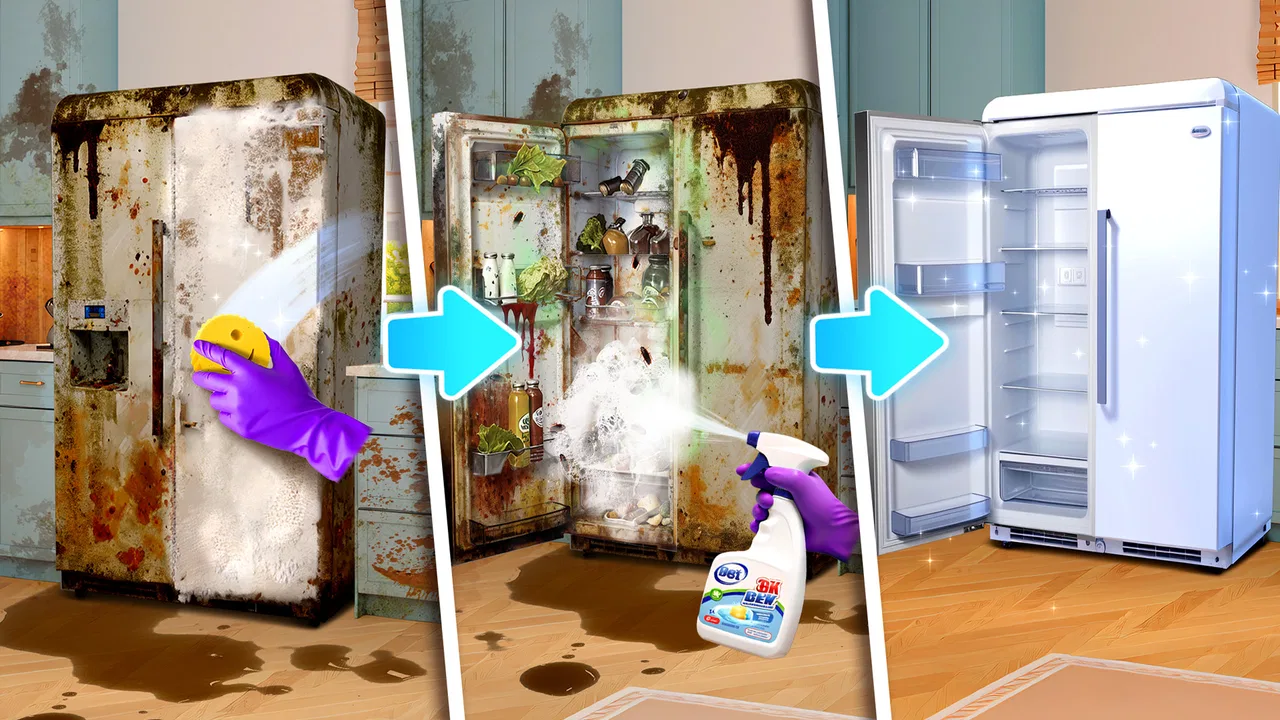
Happy Merge Home: ASMR
- 4.5
- Rating
- 10.00M
- Installs
- Free
- Price

 Analysis by App-foxy
I spent time with Happy Merge Home: ASMR as a relaxed mobile game, and its appeal became clear quickly: it turns small matching decisions into a gentle home-decoration routine. The basic idea is easy to understand, but the satisfying part comes from deciding what to merge now, what to keep for later, and how to use each reward to improve a room without making the session feel like work.
This is a casual game from Casual Joy Games, available free of charge for players rated Everyone. It has reached over 10 million installs and holds a 4.5 average from around 93 thousand ratings, which fits my impression that it is aimed at a broad audience rather than at experienced strategy players. It runs on Android 7.0 or later, and the current version is 1.0.78.
How the everyday merge-and-decorate loop feels
I find the everyday loop easiest to enjoy when I treat each visit as a small, self-contained task rather than aiming to finish everything at once. A quick scan before merging helps me keep the board understandable, especially when I am playing in a noisy or distracting setting. Next, it is worth looking at how the game’s visual and sound-led presentation can suit different sensory preferences.
You May Also Like

 Pandora - Music & Podcasts
Pandora’s Music Is Easy to Start, but Harder to Recover
Pandora’s strength is its low-effort path from a seed to a station. Its weak spot is how much confidence it asks you to place in connection, setup, and quiet recovery.

 8 Ball Pool
 Is Built on Rivalries, Rematches, and Routine
A close look at the rivalries, rematches, shared routines, and unanswered safety questions that turn a quick pool match into a persistent mobile community.

 Samsung Music
’s Quiet Strength Is Playing What You Already Own
Its reach comes less from spectacle than from dependable access to a personal library. That simplicity is both the app’s strongest retention engine and its ceiling.

 AccuWeather: Weather Radar
AccuWeather Review: A Quick, Clear Forecast for Everyday Decisions
For everyday plans, the best forecast is the one you can understand quickly. AccuWeather makes rain timing, radar, and local conditions easy to act on, with a few trade-offs.

 Hill Climb Racing
Why Hill Climb Racing Still Turns Crashes Into One More Run
A tiny car, a bumpy hill and one more upgrade: Hill Climb Racing keeps resurfacing because its simple chaos makes every near-miss feel personal.

 AliExpress - Shopping App
AliExpress Makes Global Shopping Feel Personal, but Shoppers Bear the Risk
AliExpress turns a global marketplace into a pocket-sized discovery engine. Its reach is useful, its shopping loop compelling, and its trade-offs easy to miss.
More From Our News Desk
View All News


A simple starting routine that stays easy to follow
My usual session begins by looking over the board before tapping anything. The temptation in a merge game is to combine the first available pair immediately, but a few seconds of scanning makes the play area easier to manage. I look for obvious pairs, check whether a new item will block an important space, and then decide whether I am trying to complete a task or simply tidy the board.
That small pause matters because the game is more enjoyable when I treat the board as a workspace rather than as a stream of isolated taps. Merging creates room, and the room gives me a reason to continue. Decorations provide a visible sense of progress, so even a short session can feel complete when I finish a small improvement instead of leaving the board in a chaotic state.
The core loop works particularly well during ordinary breaks. I can play for a few minutes while waiting for an appointment, take care of a couple of merges, and stop without needing to remember a complicated chain of instructions. When I return, the visual goal of improving the home gives me an immediate reason to continue.
The important distinction is that the merge board and the decorating layer serve different moods. The board asks me to think about space and combinations. The home gives me a calmer payoff. If I am tired, I focus on the decorating choices. If I want a little more involvement, I spend time organizing the available items before making a move.
What makes the decorating side more than a reward screen
For me, the home-design element is what separates this game from a plain matching title. A normal merge game can become a sequence of identical combinations, while the room gives those combinations a purpose. I am not only clearing objects; I am working toward a more pleasant-looking space.
I recommend choosing a decorating direction before spending rewards whenever possible. Even without turning the game into a serious design simulator, having a preference helps prevent random decisions. I might favor a warm, comfortable look in one room and a cleaner arrangement in another. That simple choice makes the results feel more personal and reduces the sense that I am just pressing whichever option appears first.
There is also a useful emotional rhythm here. Merging is active and slightly more demanding, while decoration is slower and more visual. Alternating between them keeps the experience from becoming monotonous. Players who enjoy calm progress, light organization, and home makeovers will probably understand the appeal quickly.
Who will feel comfortable with the pace
I think the game is best suited to people who want a low-pressure pastime rather than a demanding puzzle challenge. It is approachable for casual players, and the Everyone rating makes it a reasonable choice for households looking for a gentle game style. It can also work for players who enjoy decorating but do not want the complexity of a full construction or simulation title.
On the other hand, I would not choose it for someone seeking deep competitive play, elaborate resource planning, or a difficult puzzle system. The pleasure comes from repetition with a visible result, not from mastering a harsh difficulty curve. Players who need constant novelty may also find the routine too soft after the initial charm fades.
Settings and habits worth checking first
Before settling into longer sessions, I check the device’s sound and notification behavior and adjust them to match the situation. The game’s ASMR-oriented presentation is more enjoyable when I want a quiet sensory experience, but it is not always appropriate in a shared room, on public transport, or late at night. Muting or lowering the game sound lets me keep the visual relaxation without disturbing anyone nearby.
I also pay attention to the phone’s general battery and display settings. A bright screen can make a calm game feel unnecessarily tiring, especially when I am playing in bed. Lowering brightness and using a comfortable system display mode makes a bigger difference than I expected. These are device-level choices rather than special game tricks, but they improve the way this particular visual game feels over time.
Notifications deserve a practical check as well. If I am using the game as a short break, I prefer not to let it interrupt work or personal time. Turning off unwanted interruptions at the system level keeps the game in its proper role: something I open when I choose, rather than something that competes for attention.
I would also review purchase controls before handing the phone to a child. The game is free to download, but in-app purchases range from $0.99 to $99.99 per item. That does not make the game unsuitable for families, but it does make device-level purchase protection sensible. For my own use, I treat paid items as optional accelerators rather than as part of the basic reason to play.
Small shortcuts that make the board easier to read
The most useful shortcut is not a button; it is a repeatable visual scan. I check the edges first, then the center, and then any area where a new item might make the board harder to use. This prevents me from making a convenient merge that leaves awkward single pieces scattered around the available space.
I also try to group similar items mentally before touching them. If several possible combinations are visible, I start with the one that creates the most useful open area, not necessarily the one closest to my finger. This is a subtle change, but it reduces reshuffling and makes later moves easier to see.
Another good habit is to avoid spending every useful item immediately. Keeping one compatible piece available can be more valuable than completing a merge just because it is possible. I use this approach when the board is crowded or when I am close to a decorating objective. It gives me flexibility and prevents the session from turning into a series of moves with no room for adjustment.
When I am playing casually, I separate “progress moves” from “tidying moves.” A progress move contributes toward a goal or creates a higher-level item. A tidying move simply improves the layout. Knowing which kind I am making helps me stop at a natural point. If I only have a minute, I tidy the board. If I have more time, I work toward the next visible improvement.
How experienced play differs from random tapping
The game does not require a complicated strategy, but experienced play is noticeably more deliberate. I try to protect open space because a crowded board limits every later decision. I also avoid making a merge that looks attractive but leaves several unrelated pieces stranded in inconvenient positions.
A useful pattern is to work from the most constrained area outward. If one corner has limited room, I deal with it before filling the center with new objects. This keeps the board readable. When the layout is already open, I reverse the approach and use the center to create larger combinations before cleaning the edges.
I have found that short, repeatable sessions are more effective than one long, unfocused session. A simple routine is to scan, make the safest useful merge, clear space, check the decorating objective, and stop after a satisfying improvement. This prevents fatigue from turning careful decisions into automatic taps.
Another practical pattern is to delay decoration until I understand what the current session is trying to accomplish. Spending rewards immediately can feel satisfying, but waiting briefly helps me choose improvements that fit the room rather than selecting the first available option. I still decorate often; I just avoid treating every reward as something that must be used instantly.
Where the relaxed design can become limiting
The same simplicity that makes the game approachable can limit its long-term depth. If you want a game where every choice has a dramatic consequence, this may feel too forgiving. The board encourages planning, but it does not replace a dedicated strategy game. Its strongest quality is comfort, not complexity.
There is also a trade-off between free access and optional spending. Because the game includes in-app purchases, some players may feel tempted to speed up progress rather than continue with the normal rhythm. I recommend deciding on a personal rule before playing: either ignore purchases completely or set a firm budget and treat them as convenience items. That keeps the relaxing loop from becoming a source of pressure.
The decoration system may also appeal differently depending on what you expect. If you want detailed interior-design control, extensive customization, or a professional planning tool, a specialized design app will offer more precision. Here, the home makeover is designed to support a casual game loop, so the satisfaction comes from gradual change rather than from complete creative control.
Performance expectations are another reason to keep the game in perspective. It is a visual casual title, not a demanding action game. That makes it comfortable for short sessions, but players who want fast reflex challenges or dramatic audiovisual intensity should look elsewhere. The calm presentation is central to the experience, not a temporary introduction before a more demanding game begins.
Is it suitable for children and shared devices?
The Everyone rating makes the game approachable for a wide audience, and the simple merge-and-decoration structure is easy to explain. Still, I would not confuse an age rating with a complete family-management plan. Since optional purchases are available, adults should use the phone’s purchase controls when children can access the device.
On a shared tablet, the game works best when each player has a clear understanding of whose decorating choices are being made. A child may enjoy the visual changes, while an adult may prefer a more organized room. Agreeing on that beforehand avoids the surprisingly common frustration of returning to a room that has been redesigned without permission.
For older players or anyone who prefers calm activities, the game can be a pleasant alternative to more aggressive mobile genres. It does not demand rapid reactions, and the decorating feedback gives the session a gentle sense of completion. I would still recommend keeping sessions balanced with other activities, especially because easy progress can make “just one more merge” surprisingly tempting.
How it compares with familiar alternatives
Compared with a standard match-three game, this title feels less focused on speed and more focused on accumulation. A match-three game usually rewards quick pattern recognition and immediate board changes. Here, I get more satisfaction from building toward a home improvement and keeping the play area manageable.
Compared with a full home-design simulator, it is lighter and easier to enter. I do not need to learn a large set of construction rules before seeing a result. The trade-off is that the design side does not replace a dedicated creative tool. Someone who wants exact layouts, detailed room planning, or a broad catalog of design decisions may prefer a specialist alternative.
Compared with a traditional idle game, the experience feels more hands-on. I am not simply waiting for a number to rise; I am deciding which items to combine and how to preserve useful space. Yet it remains gentler than a strategy game because the atmosphere and decorating goals soften the consequences of imperfect play.
My practical verdict after settling into the routine
I recommend Happy Merge Home: ASMR to anyone who likes cozy mobile games, light organization, and the feeling of improving a room one small step at a time. The best way to enjoy it is to embrace its pace: scan before merging, preserve open space, use decoration as a goal, and keep purchases optional rather than necessary to the experience.
It is not the right choice if you want intense puzzles, competitive rankings, or deep interior-design control. It can also lose some appeal if repetitive progress does not suit you. But for a quiet break, a family-friendly casual game, or a relaxing alternative to faster mobile genres, it has a clear identity.
The game was released on April 28, 2022, and its continued presence alongside a large install base suggests that its straightforward formula has found an audience. My final impression is favorable because it understands what it wants to be. This is a gentle merge game with decoration as its emotional payoff, not a demanding strategy title disguised as a cozy one. If that balance matches what you want from a phone game, the free entry point makes it easy to try, while sensible purchase controls and a few organized playing habits help keep the experience comfortable.
FAQs for Happy Merge Home: ASMR
01What is Happy Merge Home: ASMR?
Happy Merge Home: ASMR is a relaxing merge-and-decoration game for Android and iOS. You combine matching items to create upgraded objects, complete tasks, and gradually renovate different rooms and home areas. Its main appeal is the calm atmosphere, satisfying merge animations, and light progression system, making it suitable for players who enjoy casual gameplay rather than fast action or complicated strategy.
02How do you play Happy Merge Home: ASMR?
Gameplay is based on merging identical objects on a board. Drag two matching items together to produce a more advanced item, then use the resulting objects to fulfill renovation or character requests. As you progress, new areas and tasks become available. The controls are simple and touch-friendly, although the board can become crowded, so managing space and deciding which items to merge first is an important part of playing efficiently.
03Is Happy Merge Home: ASMR free to download and play?
Happy Merge Home: ASMR can generally be downloaded for free from supported mobile app stores, but free access may include optional in-app purchases and advertising. Purchases can provide extra energy, currency, boosters, or other conveniences, while ads may offer rewards in some situations. You can usually play without spending money, although progress may feel slower when energy or certain resources run out.
04Does Happy Merge Home: ASMR require an internet connection?
An internet connection may be needed for the initial download, updates, advertisements, cloud-related features, and certain live content. Some basic merging may work when you are offline, but availability can depend on the current version and device. If you plan to play while traveling or without mobile data, it is best to test the game after installation rather than assuming every feature will function offline.
05Is Happy Merge Home: ASMR suitable for children and casual players?
The game is designed around gentle merging, home improvement, and relaxing visual effects, so it is approachable for casual players and people who prefer low-pressure entertainment. However, parents should still check the age rating, advertising, and in-app purchase settings before allowing children to play. As with many free mobile games, purchase restrictions are recommended to prevent accidental spending.
Pros
- Relaxing ASMR sounds make routine merging feel soothing.
- Simple controls are easy to learn without lengthy tutorials.
- Home decoration gives completed merges a visible purpose.
- Short sessions work well for casual play or quick breaks.
- Colorful visuals and gentle animations create a cozy atmosphere.
Cons
- Energy limits can interrupt play during longer sessions.
- Some upgrades require repeated merging and patience.
- Later levels may feel repetitive without major gameplay changes.
- Optional purchases can speed up progress for impatient players.
- The game may use noticeable storage and battery over time.

Happy Merge Home: ASMR
Gallery